
Worried about your baby's head shape? Start with the facts.
A pediatric plastic surgeon's plain-language journal on plagiocephaly, brachycephaly and torticollis — what the published evidence supports, and what's a sales pitch. Read it in order or jump to your question.


Where are you right now?
Three things Dr. Rogers wants you to know first.
In his own words, from the journal. Each links to the full entry.
It almost always starts with the neck, not the skull.
The flattening is always the result of poor infant head and/or body mobility early in life due to one of three issues: torticollis (this is about 95% of the cause), prematurity, or developmental delay…From Perspective is everything…..even with plagiocephaly.
Most back-sleeping babies never develop it.
Only a fraction of kids who are slept on their back actually develop clinically relevant flattening. In fact, this percentage has been estimated to be between 15-20%.From Torticollis is the primary cause of cranial flattening. How to spot and manage it. Get a coffee as this is a long one…
"Wait and see" has a deadline.
Many pediatricians still firmly adhere to the idea that deformational flattening resolves with growth and time. Unfortunately, this false concept induces a number of families to wait month after month in vain for the flattening to "pop out".From To Treat or Not to Treat- Who Should Decide?
If you're anxious tonight: the conditions that look like flattening but need urgent care are, in Dr. Rogers' words, "very rare compared to deformational flattening." The most useful thing you can do before an appointment is the simple head-rotation check described in the torticollis entry.
Read the torticollis entryRead these three, in order.
Together they cover what the condition is, what causes it, and what the evidence says to do about it.

Lets Talk About Cranial Flattening and Other Issues…
Parents, I have spent my entire professional life as an academic surgeon, studying and managing patients with conditions in the field of pediatric plastic surgery. I was fortunate as a young surgeon to be…

Torticollis is the primary cause of cranial flattening. How to spot and manage it. Get a coffee as this is a long one…
I was introduced to the clinical condition of plagiocephaly long before I came to the realization that cranial flattening simply would not occur unless there was some factor (almost invariably torticollis) restricting normal head…
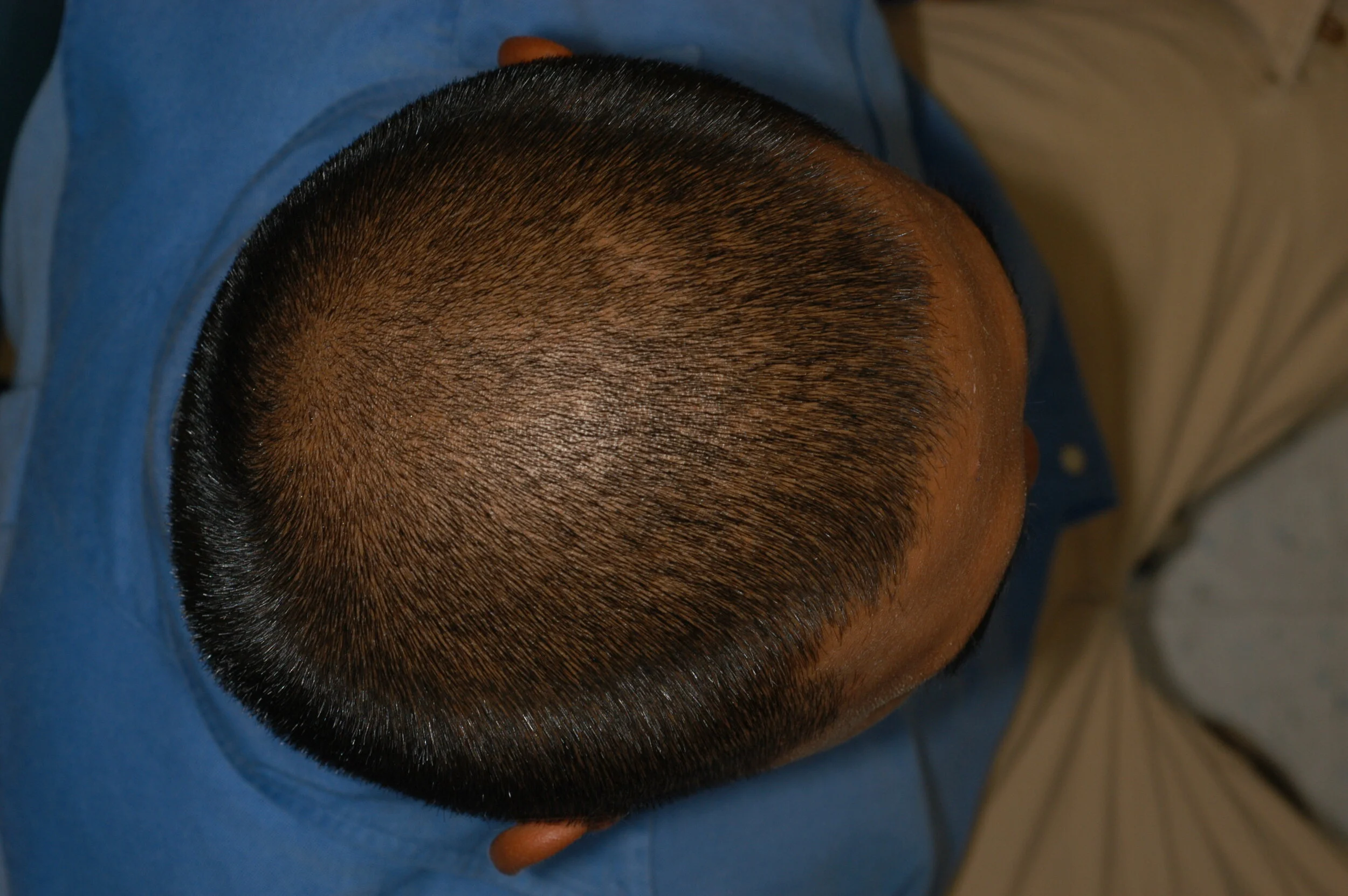
To Treat or Not to Treat- Who Should Decide?
Many pediatricians still firmly adhere to the idea that deformational flattening resolves with growth and time. Unfortunately, this false concept induces a number of families to wait month after month in vain for the…
Find your topic.
Pick one and the journal below narrows to just those entries.
Every entry.
-
 Perspective
 is everything…..even with plagiocephaly.
Parents of kids with plagiocephaly are universally interested in understanding what will happen as the child grows up. Will it worsen? Will it be noticeable to others? Well, the answer to the first question…
-
 Perspective
What do plagiocephaly and pumpkins have in common? More than you might expect.
My first experience with deformational plagiocephaly was as a pediatric plastic surgery fellow at the famous Harvard teaching affiliate, Boston Children’s Hospital. To be frank, I was star-struck by the history and grandeur of…
-
 Prevention
Finally, the arrival of the PerfectNoggin Infant Sleep Solution…..
Learn More I developed the Perfect Noggin over a decade ago. It began with a custom molded foam block, the “cup”, that was clinically shown to reduce head asymmetry significantly better than the traditional…
-
Treatment decisions
To Treat or Not to Treat- Who Should Decide?
Many pediatricians still firmly adhere to the idea that deformational flattening resolves with growth and time. Unfortunately, this false concept induces a number of families to wait month after month in vain for the…
-
 Misc
The Noggin Doctor: Afterthoughts from my ASMS Visiting Professor Lecture at the University of Chicago
I was nominated by the American Society of Maxillofacial Surgeons to be one of three visiting professors this year. It is a great honor and one that I gladly accepted. My first stop was…
-
 Helmets & industry
Helmet Companies, and the Business of Selling Helmets.
Notwithstanding the anti-helmet rhetoric and methodologically-flawed papers that suggest helmet therapy is useless, I still think think there is a role for helmet therapy in infants with moderate to severe cranial asymmetry. Sure, moderate…
-
 Myths, debunked
Plagiocephaly is NOT caused by a “soft” or malleable infant head. Debunking another medical myth.
It seems that medical myths die hard. As a scientifically-focused academic surgeon, I have always had a healthy skepticism of medical dogma. For example, there is a long-standing rule that no one should never…
-
Torticollis
Torticollis is the primary cause of cranial flattening. How to spot and manage it. Get a coffee as this is a long one…
I was introduced to the clinical condition of plagiocephaly long before I came to the realization that cranial flattening simply would not occur unless there was some factor (almost invariably torticollis) restricting normal head…
-
 Perspective
Mothers know best.
Not long after opening this web site, a good friend emailed me to say that she thought the content of the information in some areas was a bit too technical for many readers. I…
-
 Perspective
….
For the many years I have cared for infants with plagiocephaly and other forms of cranial flattening, I have seen parents faced with this diagnosis exhibit every emotion ranging from fear and extreme anxiety…
-
 Helmets & industry
Buyer beware! All helmet companies are not the same.
While I fully endorse the entrepreneurial spirit that has driven the economic success of this country, the application of this mindset to the area of medicine creates ethical conflicts that have become far too…
-
 Myths, debunked
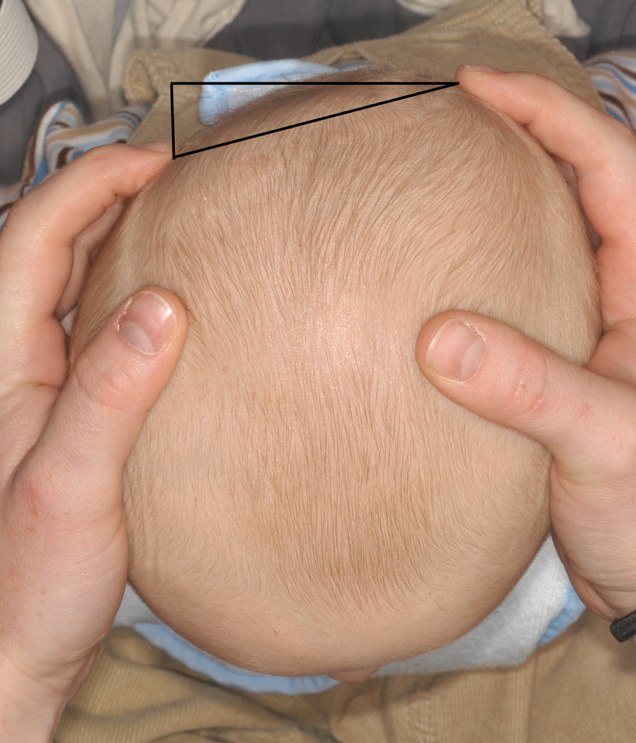
There is no evidence that craniosacral therapy improves head shape in patients with pIagiocephaly
With all the drive toward acceptance of non-traditional and alternative medical treatments, it is no surprise that the field of craniosacral therapy and chiropractic “medicine” has found some footing in the treatment of infants…
-
Perspective
Lets Talk About Cranial Flattening and Other Issues…
Parents, I have spent my entire professional life as an academic surgeon, studying and managing patients with conditions in the field of pediatric plastic surgery. I was fortunate as a young surgeon to be…
The science of deformational cranial flattening, in two parts.
Reprinted with permission from Mutaz Habal, MD, Editor, Journal of Craniofacial Surgery. Written to give parents and clinicians a good working knowledge of this condition and the issues surrounding it.

Terminology, diagnosis, and etiology
What the terms mean, how to tell deformational flattening from craniosynostosis, and the role of torticollis.
Open Part I (PDF) →
Prevention and treatment
Repositioning, physical therapy, sleep surfaces, and when helmet therapy is and isn't supported.
Open Part II (PDF) →
Why listen to me?
Gary F. Rogers, M.D., J.D., LL.M., M.B.A., M.P.H. — Chief of Pediatric Plastic Surgery, Children's National Hospital · Professor of Surgery and Pediatrics, George Washington School of Medicine
"I created this web site to combat the misinformation spun by an ever-rising number of uninformed 'experts' and opportunistic fear-mongers who play on parent fears to profit from 'flat head syndrome'."
An academic pediatric plastic surgeon specializing in craniofacial anomalies, including plagiocephaly. Trained at Tulane, UNC Chapel Hill, Boston Children's / Harvard and Massachusetts General / Harvard, he co-invented two medical devices designed to prevent plagiocephaly, including the PerfectNoggin Infant Sleep Solution, and has authored over 250 peer-reviewed articles and book chapters. He and his wife Wendy have four children and live in Great Falls, Virginia.
Credibility you can look up.
In Dr. Rogers' view, a strong record of scientific publication is the first test of true expertise. His PubMed-indexed record is one click away.
Full record on PubMed ↗- 2011
Deformational plagiocephaly, brachycephaly, and scaphocephaly. Part I: terminology, diagnosis, and etiopathogenesis.
Journal of Craniofacial Surgery · Rogers GF - 2011
Deformational plagiocephaly, brachycephaly, and scaphocephaly. Part II: prevention and treatment.
Journal of Craniofacial Surgery · Rogers GF - 2009
The role of congenital muscular torticollis in the development of deformational plagiocephaly.
Plastic and Reconstructive Surgery · Rogers GF, Oh AK, Mulliken JB - 2008
Comparison of a modifiable cranial cup versus repositioning and cervical stretching for the early correction of deformational posterior plagiocephaly.
Plastic and Reconstructive Surgery · Rogers GF, Miller J, Mulliken JB
You don't have to figure this out alone.
Join the parent discussion board for honest, evidence-based commentary, or write to Dr. Rogers directly. He welcomes comments about the site and looks forward to your questions.
- Follow
- Practice
- Children's National Hospital, Washington, D.C.
- gary.rogers@theperfectnoggin.com